
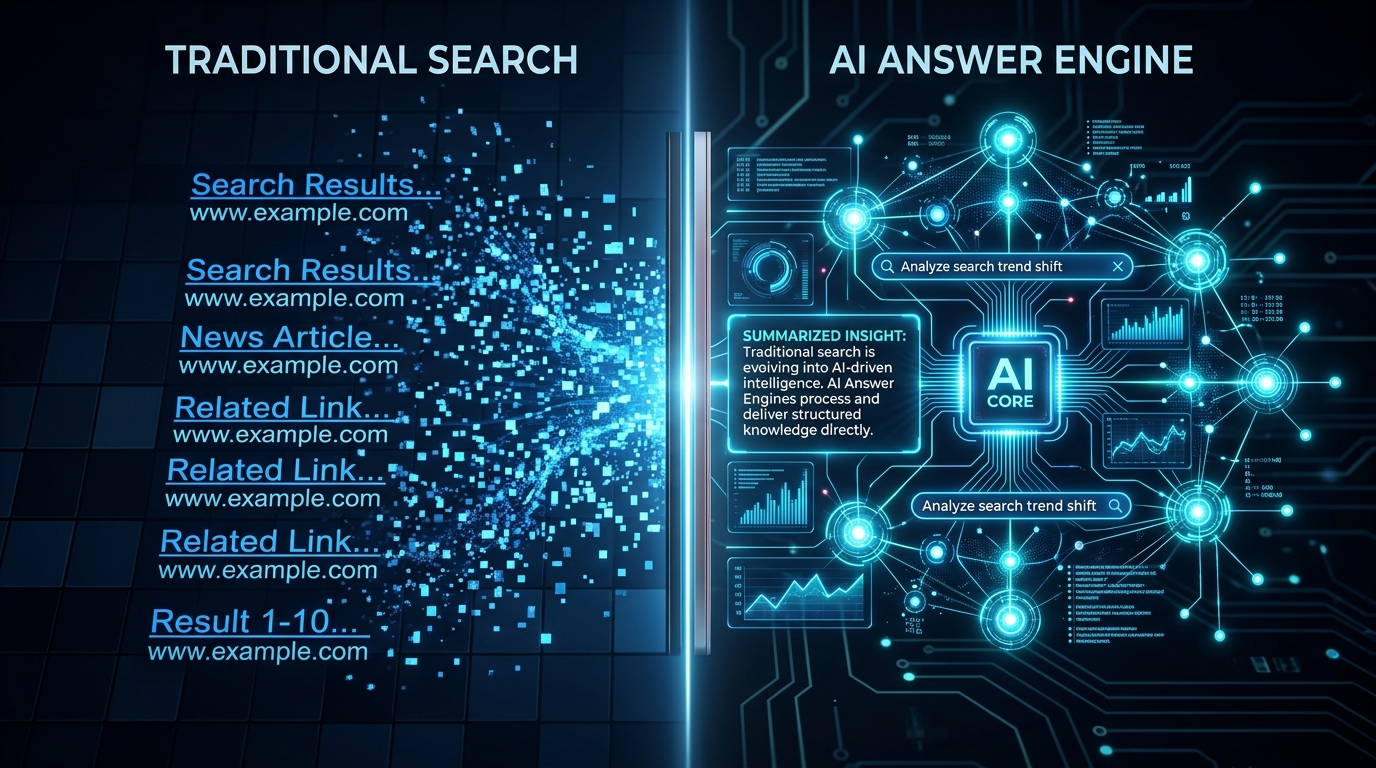
- The 68% Zero-Click Reality: Search engines have transformed from traffic routers (10 blue links) into answer engines (synthesizing answers directly on the search page), causing organic click-through rates to collapse.
- The Commercial Risk: Over-reliance on traditional informational SEO leads to the collapse of top-of-funnel discovery, escalating paid customer acquisition costs (CAC), and severe sales pipeline vulnerability.
- The Solution (GEO): Modern websites must evolve from static digital brochures into machine-readable, high-utility platforms by implementing deep structured schema (JSON-LD), proprietary diagnostic tools, entity-level E-E-A-T authority, and conversational Q&A architecture.
"Here is a statistic that should recalibrate every assumption you have about what SEO is for in 2026: Zero-click searches—queries that end without a user clicking through to any website—now represent 68% of all Google searches, according to Similarweb’s latest data."
1. The End of the "10 Blue Links": What Has Changed?
For more than twenty-five years, the economic engine of the internet followed a predictable cadence: a prospective customer entered a search query, an algorithm matched their keywords to indexed web pages, and Google presented ten blue links. Businesses competed to rank at the top of that list, capture the click, and convert the visitor.
That contract has been unilaterally cancelled.
Today, search engines are powered by conversational Large Language Models (LLMs) and retrieval-augmented generation (RAG). Platforms like Google AI Overviews, OpenAI SearchGPT, Perplexity, and Claude do not send users to your website to find information. Instead, they ingest your content, synthesize the answer, and deliver it immediately on the search screen.
Traditional Search Engine (Librarian Model)
AI Answer Engine (Synthesis Model)
At Legacy Risk, we view this transformation not merely as a marketing challenge, but as an existential commercial and operational risk. If your business model relies on traditional organic search to drive top-of-funnel discovery, lead generation, and customer acquisition, your digital pipeline is facing silent, structural erosion.
2. Why is "Zero-Click Search" a Commercial Risk for Businesses?
A zero-click search occurs when a user's query is resolved entirely on the search results page without them ever navigating to an external website.
The Illusion of Visibility
Many enterprise leaders look at brand tracking dashboards and assume they are protected because their company is cited as a small link under an AI summary. This is an illusion of visibility.
If the AI engine provides a complete, authoritative answer, the user has zero incentive to click the citation. In an answer-first economy, being cited without driving engagement is an academic footnote, not a revenue channel.
The Domino Effect on Sales & Lead Generation
- Top-of-Funnel Collapse: Informational queries ("how to calculate operational risk," "compliance guidelines in South Africa") no longer generate organic pageviews.
- Broken Conversion Pathways: When prospective buyers skip the educational phase on your site, you lose the opportunity to pixel their browser, capture their email, or guide them toward high-margin services.
- Escalating Customer Acquisition Costs (CAC): When organic traffic dries up, businesses routinely overcompensate by increasing spend on Pay-Per-Click (PPC) and Performance Max ads, sparking aggressive bidding wars that compress operating margins.
3. The Vulnerability Audit: Which Sectors Are Hit Hardest?
Not all web pages are affected equally. Informational content that merely aggregates or explains publicly available facts is the most vulnerable:
- Advisory, Risk & Compliance Services: Basic explainer articles and compliance summaries (e.g. King IV, POPIA) are easily digested and delivered by AI bots.
- Financial & Insurance Intermediaries: Generic product comparisons and policy explanations are instantly synthesized on-screen without directing traffic to brokers.
- Corporate B2B Portals: Static brochures that fail to offer interactive diagnostic utility or proprietary data are bypassed by modern buyers prompting AI engines directly.
4. Strategic Comparison: Legacy Websites vs. AI-Optimized Web Properties
The table below summarizes the operational differences between legacy web models and modern Generative Engine Optimization (GEO):
| Dimension | Legacy Website Model (Pre-AI) | Adaptive Web Model (GEO Era) |
|---|---|---|
| Primary Goal | Rank #1 on search pages to capture clicks | Become the authoritative source that AI cites and recommends |
| Content Strategy | High-volume, keyword-optimized blog posts | High-density original research, verified data & case studies |
| User Experience | Passive reading and static form fills | Interactive calculators, diagnostic tools & live utility |
| Technical Focus | Meta keywords, backlinks, crawl depth | Advanced JSON-LD Schema, Entity validation, Semantic DOM |
| Core Success Metric | Pageviews, bounce rates, total impressions | Brand prompt share, high-intent conversions, pipeline value |
5. The Blueprint: How Websites Must Transform for AI
To maintain market visibility and commercial relevance, organizations must transition from Search Engine Optimization (SEO) to Generative Engine Optimization (GEO) across four architectural pillars:
High-Utility Experience
Deploy interactive diagnostic tools, proprietary calculators, and dynamic assets that AI text interfaces cannot reproduce.
Machine-Readable Schema
Implement comprehensive JSON-LD schemas (Organization, Service, FAQ, Dataset) and clean semantic DOM structures.
Entity Authority & E-E-A-T
Establish verified executive profiles and build third-party industry consensus across the global knowledge graph.
Conversational Q&A Architecture
Structure content around complex multi-tier enterprise decision prompts rather than isolated, robotic keywords.
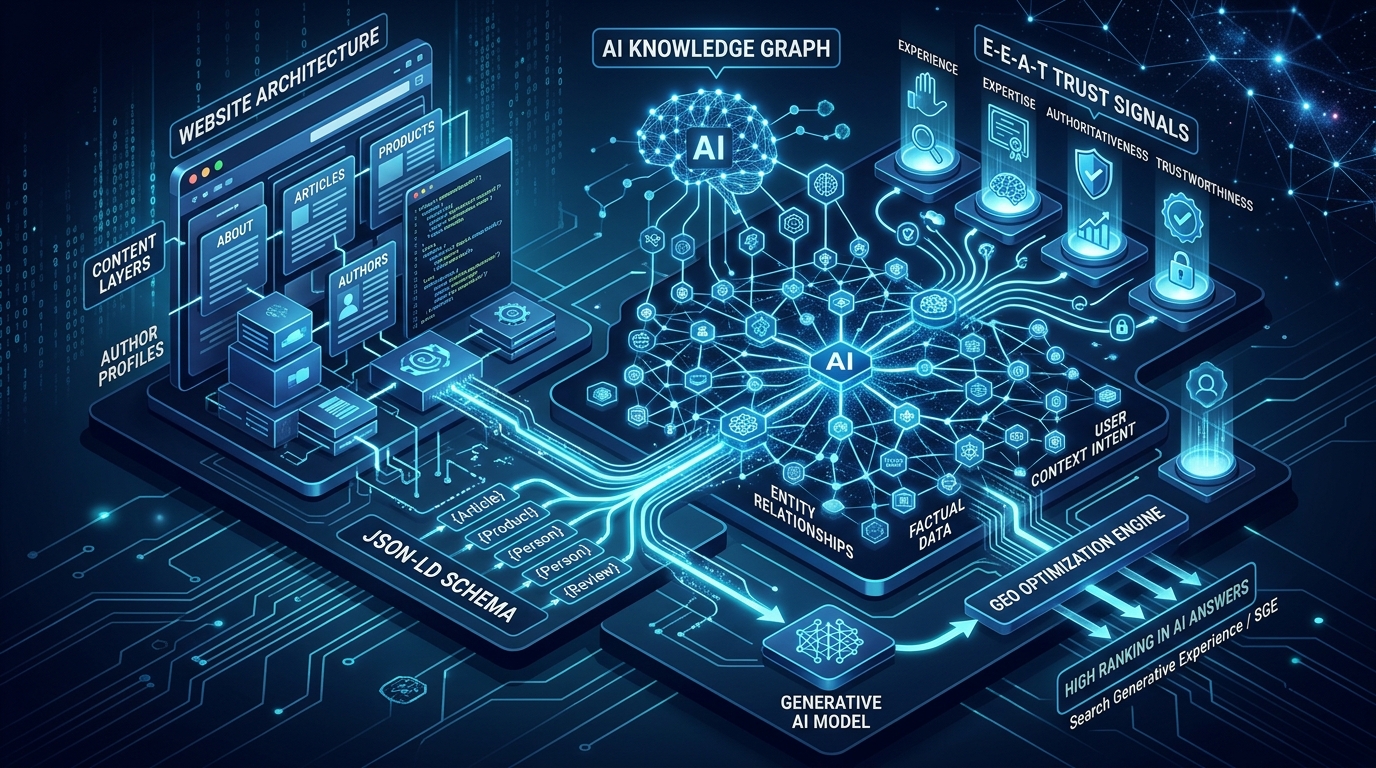
Pillar 1: Transition from Information to Utility
If your content can be summarized in plain text, an AI bot will do so. To earn human visits, your website must offer dynamic utility that cannot be executed in a chat window.
- Interactive Risk Diagnostics & Calculators: Develop custom online tools where users input operational variables to receive real-time, customized diagnostic reports.
- Proprietary Datasets & Original Research: AI models cite unique data they cannot invent. Publish primary industry benchmarks, empirical surveys, and market insights that force AI engines to credit your brand as the primary source.
- High-Value Operational Assets: Shift from gating generic PDF guides to offering functional spreadsheet models, interactive frameworks, and live advisory sessions.
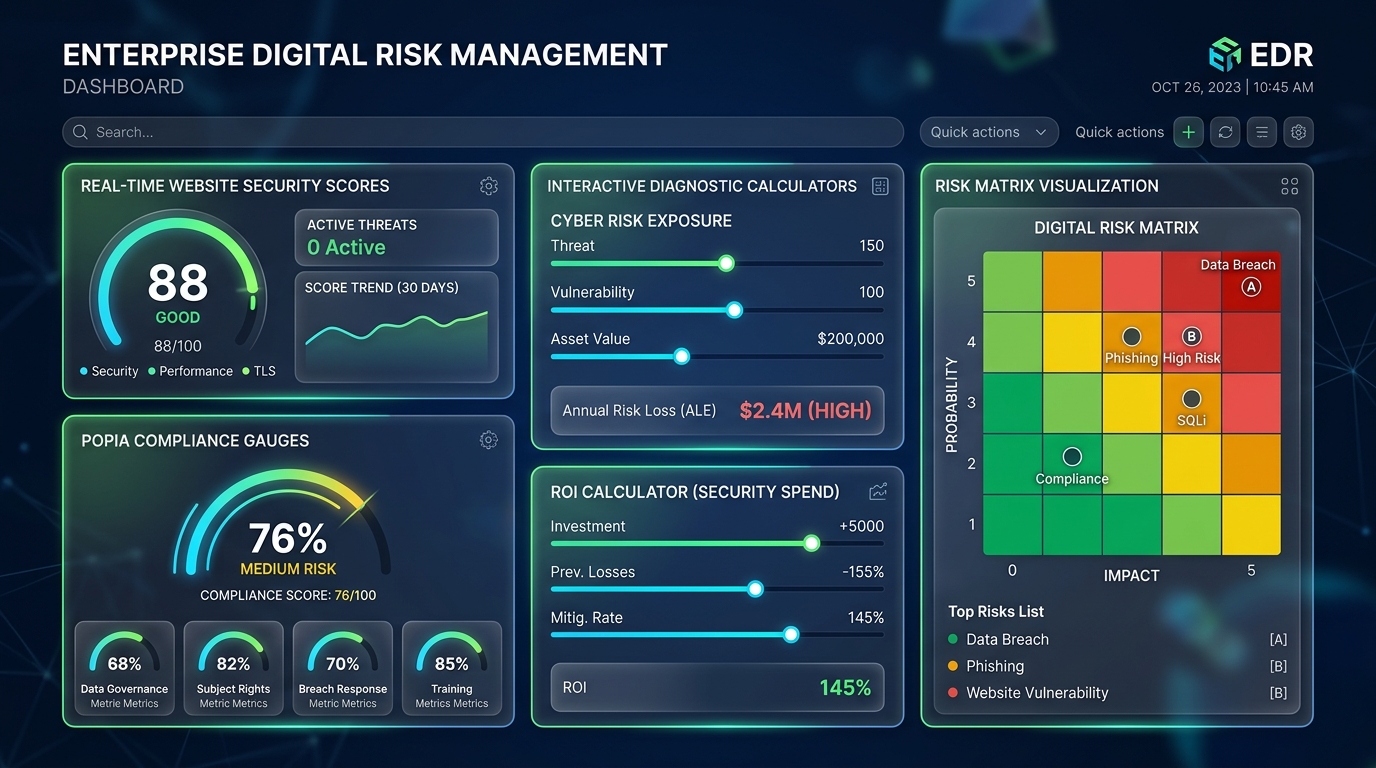
Pillar 2: Engineer for Machine Readability (Agentic Optimization)
AI agents and crawlers (such as GPTBot, PerplexityBot, and Google-Extended) do not browse like humans. They evaluate structured data and information density.
- Implement Advanced JSON-LD Schema: Move beyond basic article markup. Deploy nested schemas for Organization, Service, Person (author credentials), AboutPage, FAQPage, and Dataset.
- Inverted Pyramid Content Design: Place the core thesis, numerical data, and definitive conclusions in the first 100 words of every page. Eliminate lengthy introductions and corporate filler.
- Semantic HTML Architecture: Use clean heading hierarchies (<h1> → <h2> → <h3>), descriptive tables, and uncluttered Document Object Models (DOM) that scrapers can parse without executing heavy JavaScript.
Pillar 3: Establish Entity Authority and E-E-A-T
Generative engines do not evaluate isolated web pages; they evaluate brand entities across the entire digital knowledge graph.
- Named Author Verification: Link every article to a verified professional profile with recognized credentials, industry affiliations, and published track records.
- Third-Party Consensus Building: AI engines cross-reference external industry journals, press coverage, and regulatory registers. If third-party sources corroborate your expertise, AI models treat your domain as a primary authority.
- Consistent Entity Data: Ensure your company name, registration details, leadership team, and physical addresses are 100% consistent across regulatory databases, LinkedIn, and business directories.
Pillar 4: Optimize for Conversational and Multi-Part Prompts
Modern business leaders do not search with rigid keywords like "risk advisory services". They prompt AI engines with complex contextual scenarios:
"We are a mid-tier logistics provider expanding across Southern Africa facing supply chain liability. What risk governance and compliance framework should our board implement?"
- Contextual Problem Mapping: Structure content around multi-layered enterprise scenarios, detailing prerequisites, regulatory frameworks, and execution steps.
- Direct Q&A Modular Sections: Incorporate dedicated Question-and-Answer modules that address explicit buyer decisions directly under clear <h2> and <h3> tags.
6. Frequently Asked Questions (FAQ)
Why is organic website traffic declining across South African businesses?
According to Similarweb data, 68% of all Google searches now end in zero clicks. AI answer engines (like Google AI Overviews, Perplexity, and ChatGPT Search) synthesize direct answers on the results page, preventing users from ever clicking through to traditional informational websites.
What is the difference between traditional SEO and Generative Engine Optimization (GEO)?
Traditional SEO focuses on optimizing websites for keyword rankings and backlink volume to drive user clicks from search engine result pages. Generative Engine Optimization (GEO) focuses on optimizing content structure, entity authority, and machine-readable data so that AI models synthesize and cite your brand as the definitive answer to conversational prompts.
What immediate steps should business leaders take to fix their architecture?
1. Audit your website for zero-click query exposure.
2. Embed advanced JSON-LD schema across your core service pages.
3. Replace generic informational blog posts with proprietary research and interactive diagnostic tools.
4. Verify your executive and organizational entity signals across external industry knowledge graphs.
Is Your Digital Infrastructure Built for the Next Era of Search?
At Legacy Risk, we help businesses identify, assess, and mitigate strategic vulnerabilities before they compromise commercial performance. Run our free automated audit tool to test your website's security, SEO, and machine readability.